A bill, not a single genre
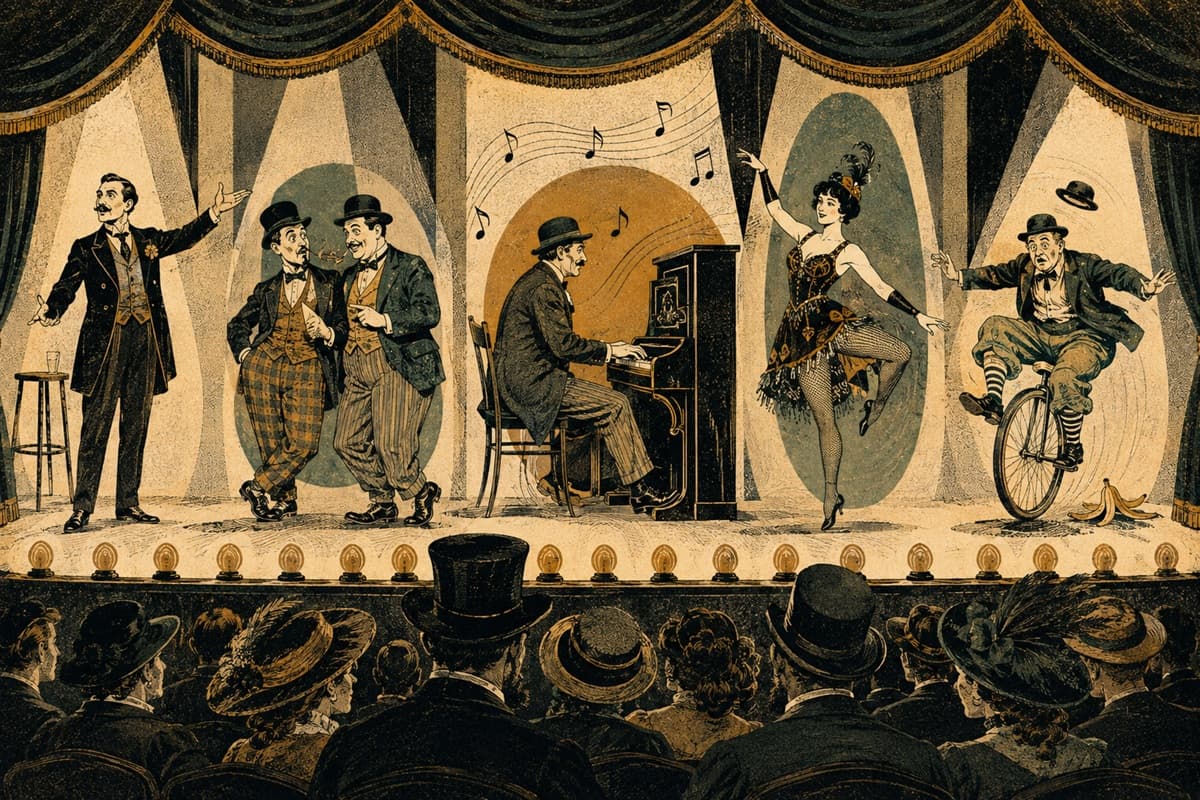
Vaudeville was variety entertainment organized as a succession of acts. A bill could include singers, dancers, acrobats, animal acts, magicians, monologists, comic teams, and short sketches. Its comedy was therefore modular. An act needed a recognizable identity, a practical running length, and enough control to survive different theaters and audiences.
Circuits made that portability economically important. Performers traveled, repeated material, measured response, and revised. The result resembles iterative testing, but the human conditions mattered: room size, billing order, local knowledge, fatigue, and the chemistry of a particular crowd could all alter the same routine.
The stock and the specific
The Library of Congress describes vaudeville's shared stock materials: jokes and song parodies, monologues, two- or three-person bits, and short comic scenes. “Stock” did not mean every performance was identical. It provided familiar structures that a performer could personalize through wording, character, rhythm, gesture, and physical business.
A double act made contrast visible. One performer could establish order while the other misread, disrupted, or exploited it. The straight role was not simply the unfunny half; it set the rhythm and made the comic partner's departures legible.
What cannot be written down
Joke books and notebooks preserve material, but not the whole act. Physical business includes the inflection, body language, handling of props, glances, and pauses that turn text into performance. A transcript may make a routine appear repetitive because it cannot show how the repetition changes.
This distinction matters when discussing originality. Performers often worked within circulating material while building recognizable personas and arrangements. Modern authorship expectations do not map neatly onto every historical performance economy.
The harm inside the archive
Vaudeville also drew on ethnic caricature, blackface minstrelsy, gender stereotypes, and other degrading conventions. Those elements were not accidental footnotes to the form. They shaped employment, audience expectation, and the stock material available to performers. A useful history acknowledges both technical influence and the unequal social system through which that influence traveled.
Routes into later media
Vaudeville performers, writers, and formats moved into film, radio, and television. Variety shows retained the mixed bill. Sitcoms reused comic types and situations. Stand-up inherited the monologue and direct audience relationship. Sketch comedy retained the compact scene with a quickly readable premise.
The legacy is not that later media copied vaudeville unchanged. Each medium selected what traveled well. Film magnified physical detail; radio privileged voice and sound; television blended recurring personality with domestic access. Vaudeville supplied a toolbox and a workforce trained to adapt it.