Overview
Born in 1990, Bo Burnham repeatedly turns the performance apparatus into comic material. Songs, camera angles, lighting, edits, screens, and apparent backstage moments can deliver jokes while questioning how they are being watched. The New Yorker documented his rise through teenage YouTube videos; later stage work and film expanded his control over framing. Inside, released by Netflix in 2021 and created in a room with Burnham as the central performer and maker, is the clearest example. Its comedy is inseparable from composition, editing, music, and the visibility of production itself.
Development of the act
Burnham’s development can be read as increasing control over medium. Early internet performance compressed music, wordplay, direct address, and self-conscious presentation for the camera. Stage specials enlarged those devices through lighting, sound, prerecorded elements, and choreography. Eighth Grade, written and directed for A24, moved him behind the camera to a fictional adolescent navigating social media; a Writers Guild interview documents the writing process. Inside then collapsed roles again: performer, writer, director, editor, musician, camera operator, and onscreen subject became visibly entangled. The Television Academy’s directing award for Inside recognizes one part of that unusually integrated production.
Persona
The Burnham persona is deliberately unstable. At one moment he can occupy the familiar role of entertainer; at another he points attention toward the machinery, incentives, vanity, or awkwardness of entertaining. Self-reflexiveness prevents a simple equation between onscreen confession and transparent autobiography. Inside is particularly careful about this ambiguity: apparent vulnerability is presented through conspicuous lighting, blocking, retakes, screens, and edits, reminding the viewer that sincerity can be real while its presentation is still constructed. The persona functions as both performer and critic of performance.
Techniques
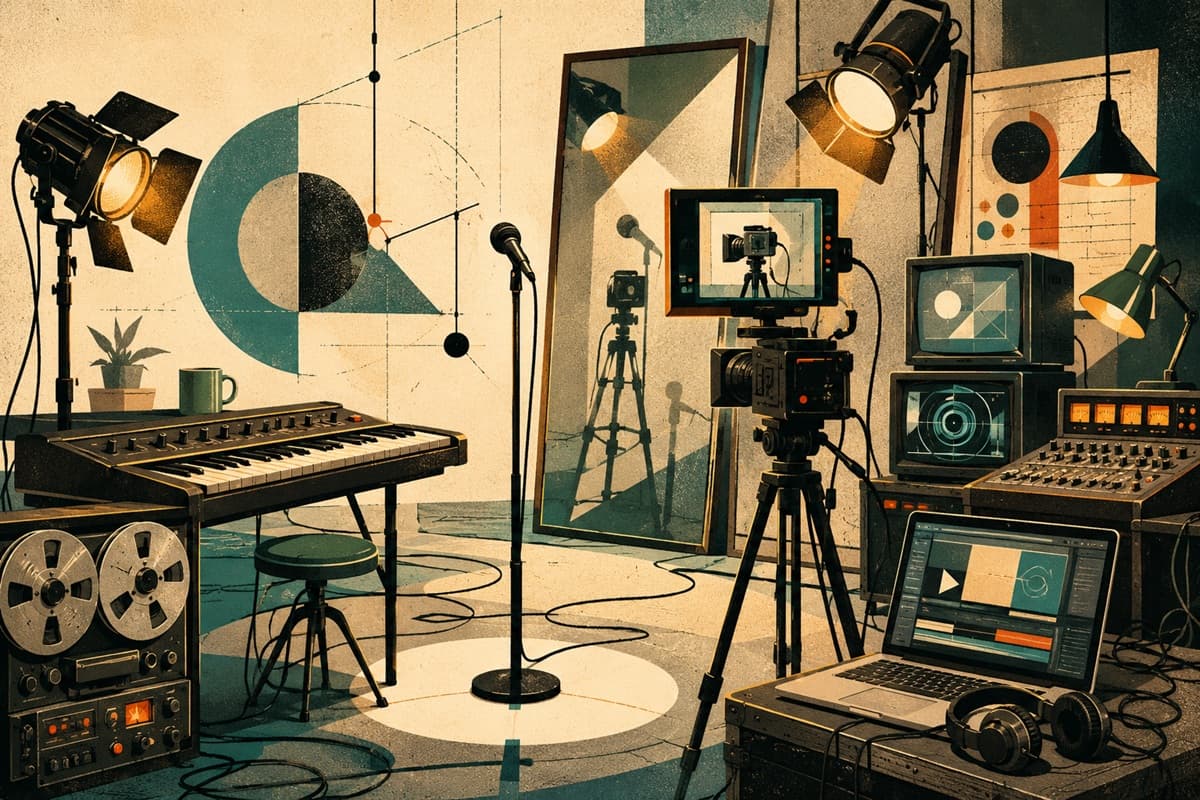
Musical structure adds mechanisms unavailable to ordinary spoken stand-up. Repetition can occur melodically as well as verbally; a change of arrangement can reverse the emotional meaning of a familiar form; and the expectation created by a genre can be used as setup. Meta-comedy adds a second track, because the work can comment on its own attempt to entertain while it is entertaining. Visual composition supplies still another layer. The New Yorker emphasizes Inside’s room, equipment, clutter, and framing, while Netflix identifies its one-person production context. Cuts, focus changes, projected light, and revealed equipment can therefore operate like punch lines or callbacks rather than neutral documentation.
Timing and delivery
Burnham’s timing is often editorial rather than purely live. A pause may be performed in front of a camera, created or tightened in the edit, synchronized to a musical beat, or extended by holding on an image after the expected endpoint. Timing therefore becomes a property of the audiovisual object, not only speech. Onstage, cues and prerecorded elements similarly allow timing to be distributed across human delivery and technical systems. Inside pushes that logic furthest because the viewer repeatedly sees traces of setup and repetition. The comedy can arrive from the gap between a seemingly spontaneous feeling and the visibly engineered sequence that presents it.
Language and style
Burnham’s language frequently works in layers: compact verbal jokes, rhyme, repeated phrases, genre conventions, and commentary on the act of producing those things. The writing can be dense, but visual and musical form often carries part of the argument, so transcription alone would miss crucial information. The work sharply distinguishes comedy text from comedy performance. Eighth Grade provides a related lesson in another genre: the film’s attention to mediated self-presentation reflects Burnham’s long interest in how cameras and platforms shape behavior, while the Writers Guild interview grounds that concern in a documented writing process rather than treating the film as disguised stand-up.
Innovations and influence
Burnham did not invent musical comedy, self-reference, or internet performance, but his body of work makes their convergence unusually visible. The path from teenage YouTube distribution to technically elaborate stage shows, feature-film direction, and Inside demonstrates how comedy can change when the creator treats distribution technology and production grammar as part of the form. Inside’s Emmy-winning direction recognizes that integration, while New Yorker criticism focused on mediation, composition, and the cinematic self. Its broader craft importance lies in making an old question newly concrete: when the camera is always present, is it recording the performance, shaping it, or becoming one of the performers?
What AI can learn
Generative AI can learn from Burnham’s formal layering without copying songs, lyrics, or persona. A system can model how one channel establishes an expectation while another disrupts it: cheerful musical form against discordant subject matter, a polished frame interrupted by visible equipment, or a repeated image returning with altered context. It can also model edit order and visual callbacks. These are compositional relationships. They do not mean the system experiences self-consciousness, understands why a mediated identity matters, or possesses an intention to critique the medium it is using.
What remains difficult for AI
What remains difficult is deciding why a particular imperfection, reveal, or edit should matter to a human audience at that moment. Burnham’s work depends on embodiment and on the viewer’s awareness that a person is spending time, labor, attention, and reputation inside the frame. An AI system can synthesize signs of effort or backstage exposure, but it does not live through isolation, performance pressure, artistic risk, or audience judgment. Context also changes rapidly online: a device that reads as incisive in one platform culture may feel stale in another. Medium-aware comedy therefore requires more than recognizing the grammar of media.
Sources and further reading
- Watch Bo Burnham: Inside | Netflix Official Site — Netflix
- Eighth Grade | A24 — A24
- Episode 12: Bo Burnham, "Eighth Grade" | OnWriting | Writers Guild of America East — Writers Guild of America East
- Bo Burnham | Emmy Awards and Nominations | Television Academy — Television Academy
- Bo Burnham’s Age of Anxiety — The New Yorker
- “Inside,” Reviewed: Bo Burnham’s Virtuosic Portrait of a Mediated Mind — The New Yorker
- Bo Burnham and the Possibilities of the Cinematic Selfie — The New Yorker